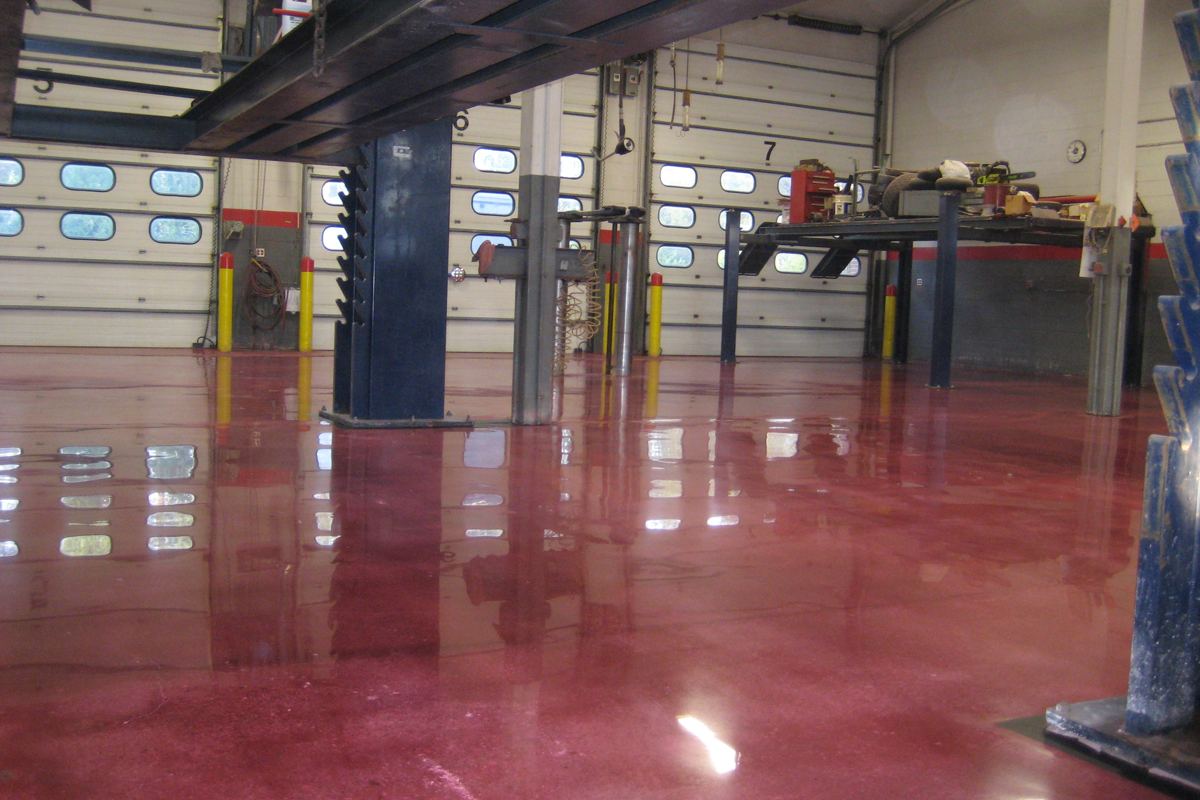
Service bay floors for Ocala auto and equipment shops
Ocala Epoxy Professionals coats floors in auto shops, tire and service bays, and tractor and equipment shops across Marion County. Call to talk it through, or send the basics and someone will walk the shop before quoting.
Auto shop and service bay floors: example floors
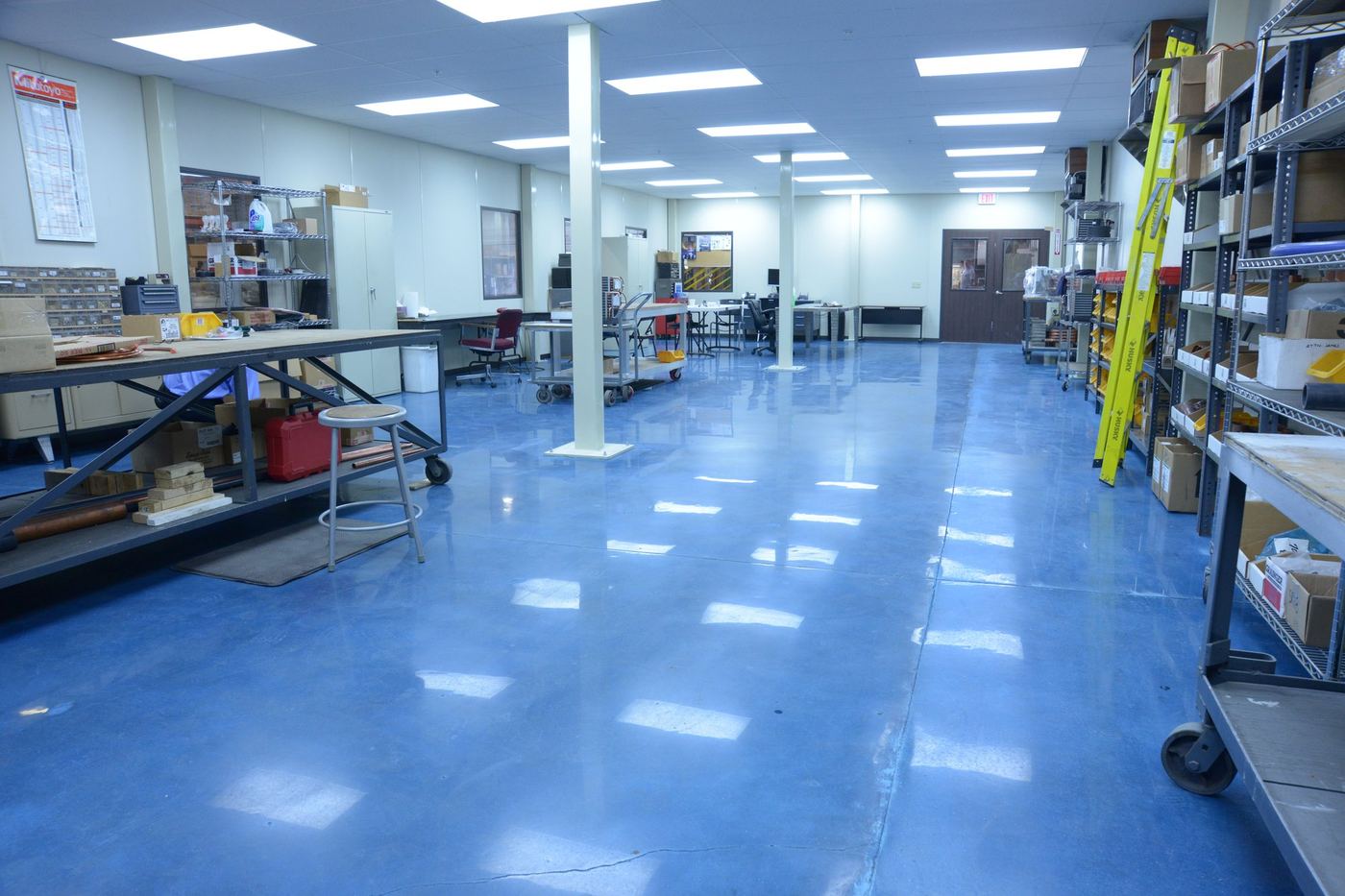
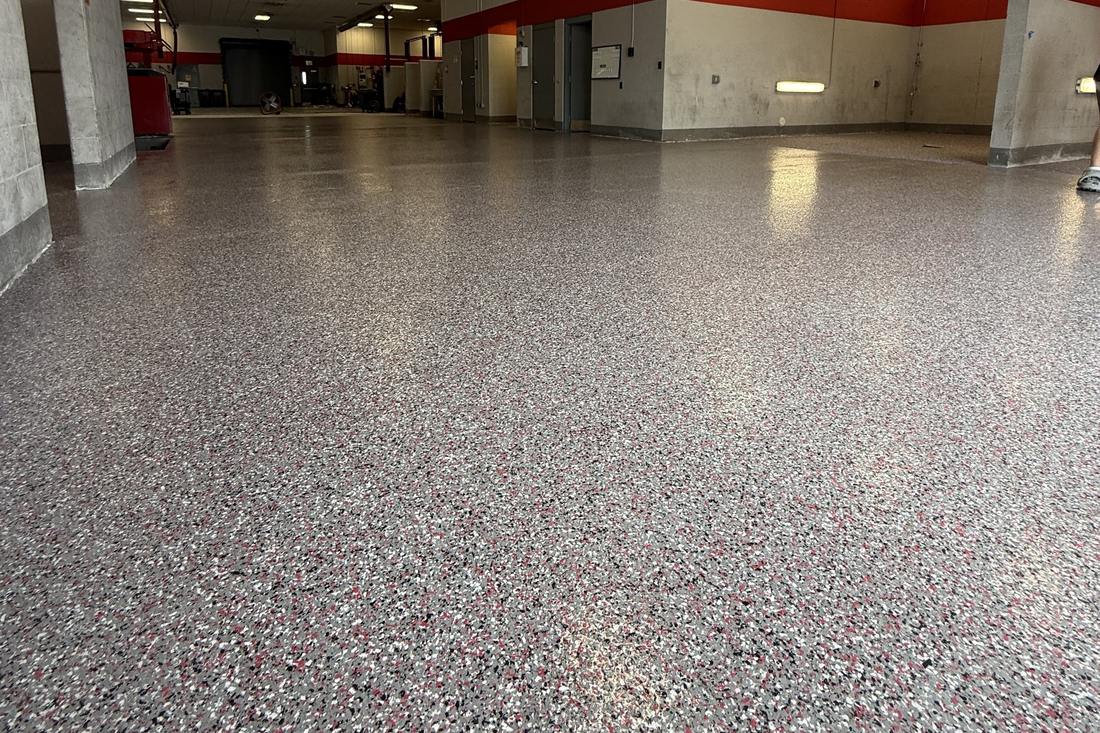
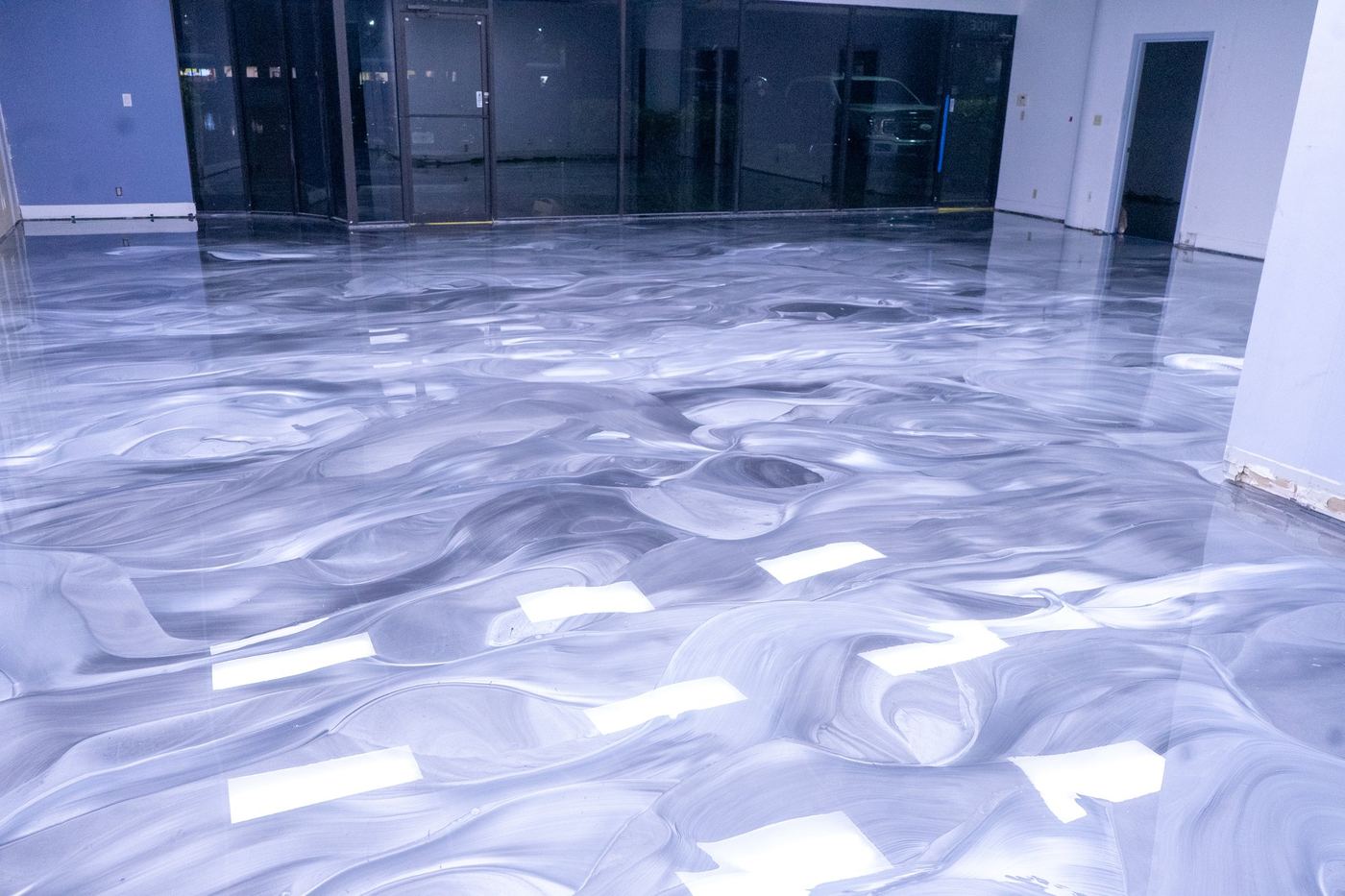
Example photos of finished commercial floors, shown for the look. Not photos of a specific Ocala Epoxy Professionals job. Ask for photos of comparable work on the walkthrough.
What matters on a shop floor?
Resistance to oil and fluids, hot tires, jacks and stands, easy cleanup, and keeping bays open while the work is done.
Oil, brake fluid, coolant and solvents soak into bare concrete and stain it for good. A sealed, chemical-resistant floor wipes up instead. A lighter floor color also makes dropped parts easier to find and brightens the bay.
Fluids and chemicals
A topcoat chosen for the fluids your shop uses.
Hot tires and jacks
A build that takes rolling jacks, stands and hot tires.
Bay by bay
Work one bay at a time so the shop keeps running.
Customer areas
A cleaner look for the waiting room and write-up desk.
Which system fits a shop?
A solid color or flake system with a chemical-resistant topcoat, with grit added where floors get wet or oily.
Lifts, drains and trench grates need their own edges. Tell the crew which chemicals you use every day so the topcoat suits them.
Around lifts
Coating finished cleanly around lift posts and plates.
Drains and trenches
Edges sealed so water and fluids drain off.
How is a shop floor priced?
Per project, after a walkthrough. Oil-soaked concrete and the system the shop needs move the cost the most.
You get a written price and a plan before anything is booked. The walkthrough and quote are free.
The existing floor
Old coatings, tile, adhesive or oil-soaked concrete all add removal and prep.
The system
What the floor has to handle decides the build and its thickness.
Bays and schedule
How many bays, and whether they can close together or one at a time.
How does the project run?
Walkthrough and written quote
Someone walks the space with you, asks how it is used and cleaned, checks the slab and talks through your hours. You get a written price and a plan before anything is booked.
Moisture test
The slab is tested before a system is chosen, because moisture coming up through concrete is a common reason coatings lift.
Prep
Old coatings, adhesive and oil come off, and the surface is diamond-ground with dust collection so the system bonds into the concrete.
Repairs, drains and edges
Cracks and joints are repaired, and coving and drain details are built where the space needs them.
Coating system
The base, the color or texture and the topcoat go down, zone by zone if the schedule calls for it.
Handover
You walk the floor and get care notes and the times when each area can take people, carts and full use.
Questions owners and managers ask
Can an oil-stained shop floor be coated?
Usually, yes, but the oil has to come out or be cut away first, because a coating over oil can let go in patches. Older shops often need more prep, which is why the floor is checked on the walkthrough before a price is written.
Can you work one bay at a time?
Yes. Many shops keep most bays open while one or two are coated, then move down the line. Cure times decide when each bay can take a vehicle again, so the order is planned with you.
Will hot tires mark or lift the floor?
Hot tires can lift thin coatings and paint. A properly prepared floor with a suitable topcoat holds up to normal shop traffic. Say what vehicles and equipment come in so the system is matched to them.