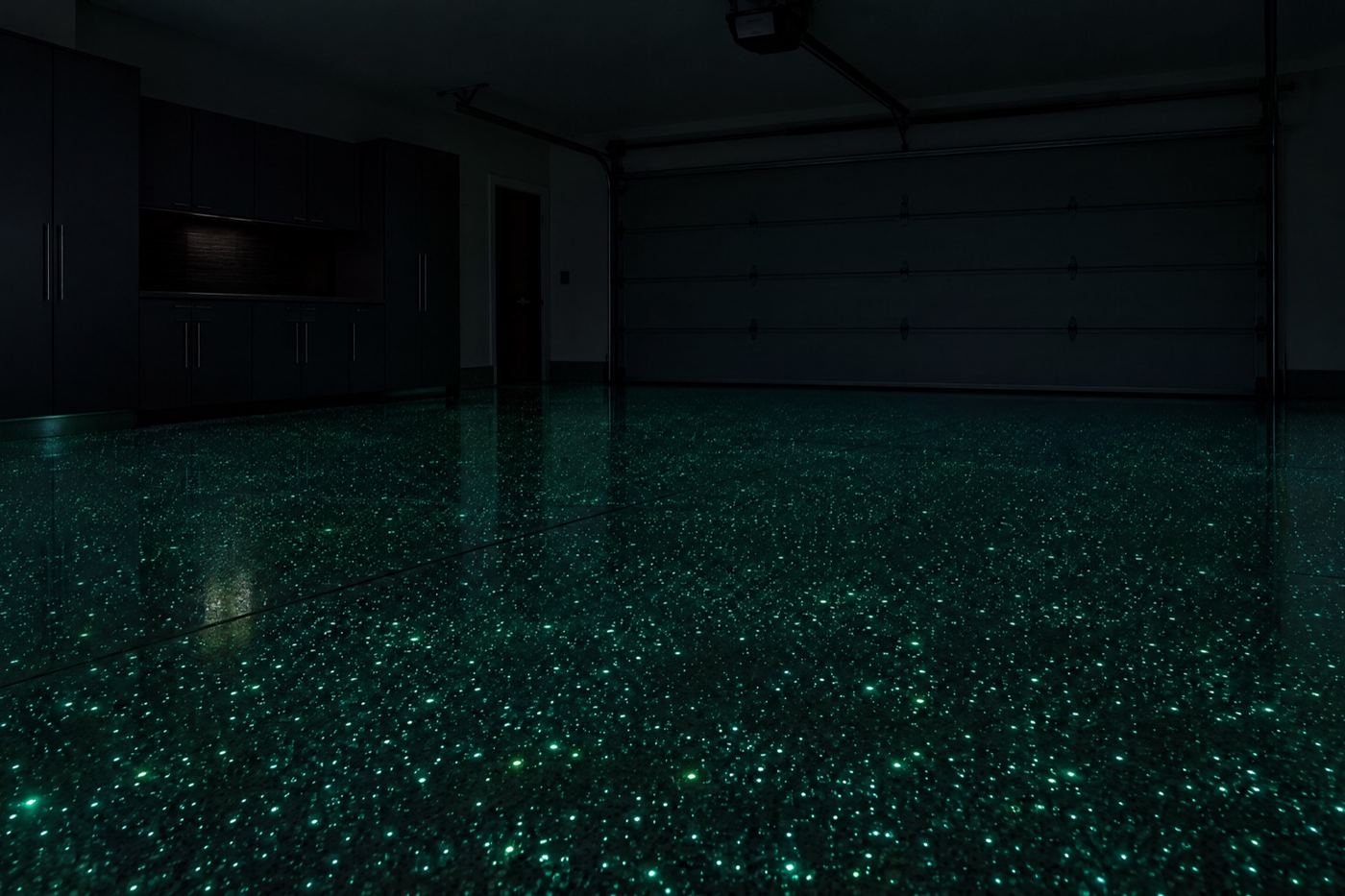
Glow-in-the-dark epoxy floors in Ocala
A floor that charges in daylight and glows softly once the lights go off. Here is how glow and black-light finishes differ, where they suit a Marion County home, and what to ask before you pick one.
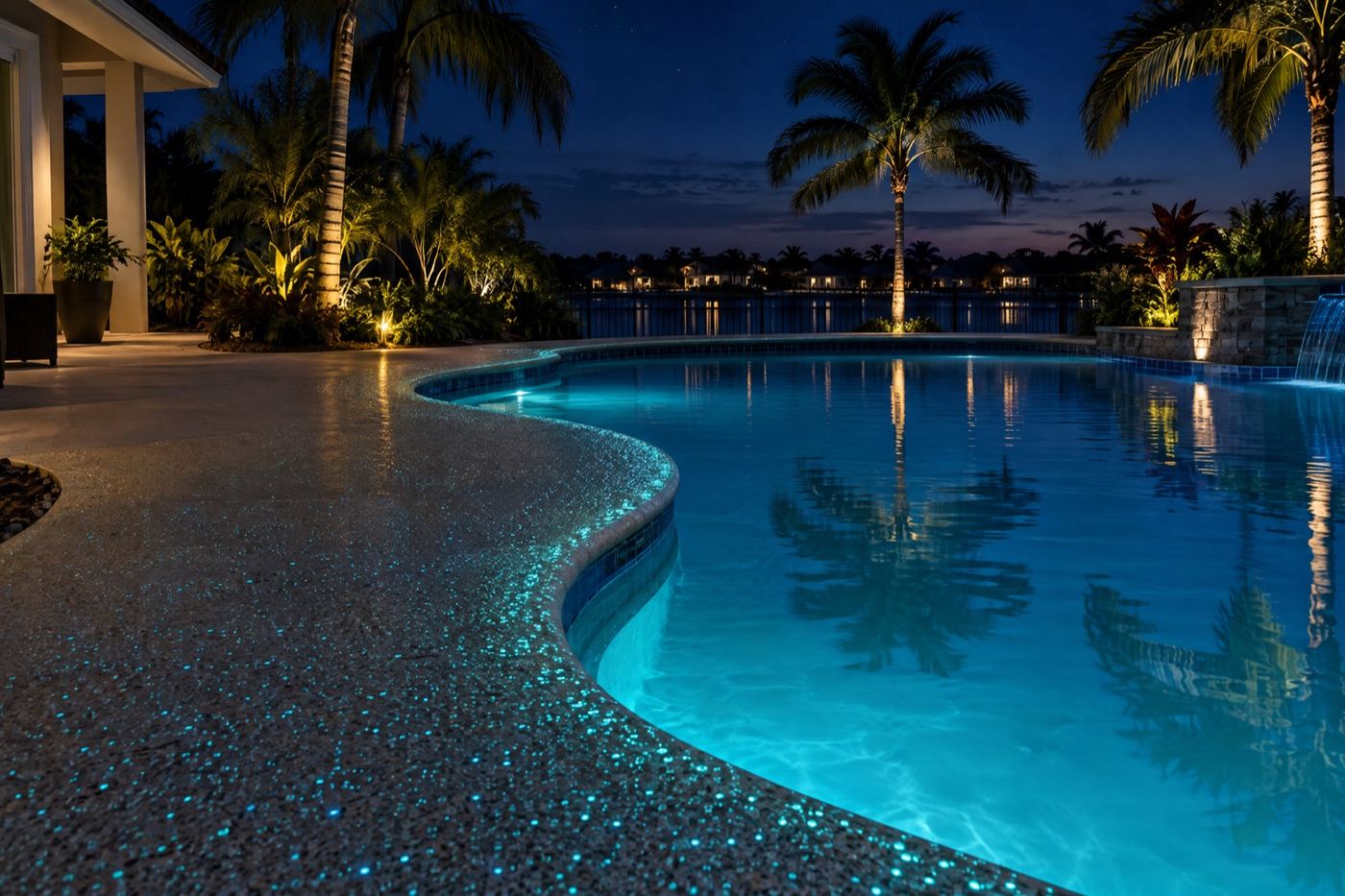
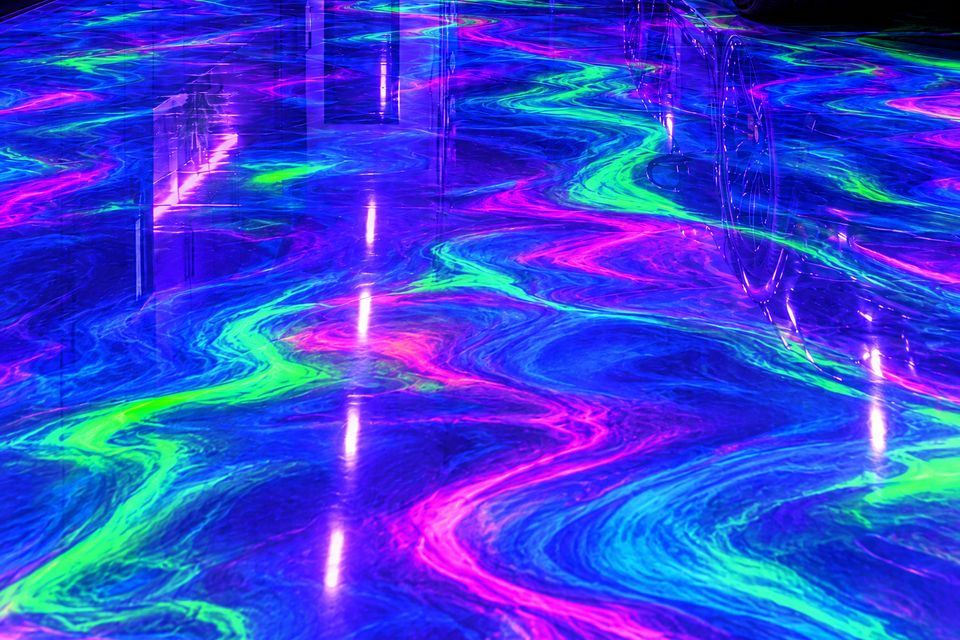
Design examples (AI renderings) to show the look. Not photos of past jobs. Your installer brings physical samples to the quote.
Glow-in-the-dark or black-light: what is the difference?
A glow-in-the-dark floor stores light and glows on its own after dark; a black-light floor only lights up while a UV lamp shines on it.
Both are a normal epoxy system with a special pigment in one layer, sealed under a clear topcoat. The difference is where the light comes from. If you want a soft glow with every light off, you want photoluminescent pigment. If you control the lighting, as in a game room or home theater, and want bright neon color on demand, look at a UV-reactive floor.
Glow in the dark
Charges from daylight, room lights or LEDs and glows with no lamp. Brightest at first, then fades over hours.
Black light (UV)
Shows bright color only while a UV lamp is on, then looks normal again.
In daylight
Glow pigment reads as a pale tint. UV pigment reads as a bright color.
Where does a glow floor work around Ocala?
Anywhere that really gets dark: garages, game rooms, kids' rooms and home theaters inside, and lanais, pool decks and garden paths outside.
A glow floor is an accent, not a light source. In a garage it marks the walk to the door when the lights go off. On a lanai or pool deck it can outline the edges after sunset. In a game room or kids' room it is simply fun.
Garages and workshops
A soft glow along the path to the house door.
Game rooms and theaters
A floor that keeps glowing after the screen goes dark.
Kids' rooms
Stars, swirls or borders that glow at bedtime.
Lanais and pool decks
Edges and paths that show after sunset.
How long does it glow, and what does it need?
It is brightest in the first minutes after dark and fades over several hours, and it needs light to recharge.
Expect a soft glow, not a lamp. Daylight and bright LEDs charge it best; a room that never gets bright light gives a weak glow. How much pigment goes in also changes the strength, which is one of the things that moves the price.
It fades
Strongest right after the lights go off, dimmer through the night.
It needs light
Florida daylight charges outdoor glow well.
More pigment, more glow
Often used as one color within a metallic or flake floor.
Can a glow finish go on a lanai or pool deck?
Yes, with an outdoor system: a UV-stable topcoat so it does not yellow, and texture for wet, bare feet.
Strong sun charges the pigment well during the day, so borders and paths glow after dark. The topcoat is the part that matters outdoors. Ask which texture suits a wet deck and where the glow should go so it is seen without covering the whole surface.
UV-stable topcoat
Stops the clear coat from yellowing in full sun.
Texture for wet feet
Grip around the pool, comfortable underfoot.
Borders and paths
Outdoors, glow is usually an edge or a path, not the whole deck.
What moves the price of a glow floor?
Every floor is quoted after someone looks at the slab, so you get a written number before any work starts.
A glow floor is a standard coating system with extra pigment and a bit more care, so the usual things that move a floor price apply too.
Amount of pigment
A full-floor glow uses far more than a border or pattern.
Slab condition
Cracks, old coatings and moisture need work first.
Indoor or outdoor
Outdoor jobs need a UV-stable topcoat and texture.
How a glow floor gets done, step by step
Free visit and samples
Someone looks at the slab, measures the space and shows you glow and black-light samples. You get a written price before anything is booked.
Moisture check
The slab is checked first, because moisture coming up through concrete can lift a coating.
Diamond grinding
The surface is ground with dust collection so the coating can bond.
Crack and joint repair
Cracks and chips are filled and leveled.
Base coat and glow layer
The base goes on, then the layer with the glow or UV pigment, spread evenly.
Clear topcoat and walkthrough
A clear topcoat seals the pigment. Then you walk the floor, ideally with the lights off.
Glow-in-the-dark floor questions
Is a glow-in-the-dark floor durable?
The pigment sits in one layer under a clear topcoat, and the topcoat takes the traffic and cleaning like any coated floor. Over years of heavy use the topcoat may need refreshing, which also keeps the glow layer protected.
Do I need a black light for it?
Not for a glow-in-the-dark floor, which charges from daylight and ordinary lights. A black light is only needed for a UV-reactive floor, which shows its color while the lamp is on.
Which colors glow brightest?
Greens and aqua blues are usually the brightest and longest lasting. Other colors can look softer. Ask to see physical samples in a dark room, because a photo on a screen will not tell you.
Can just a border or pattern glow?
Yes, and many people choose that. A border, stripe or simple shape gives the after-dark effect with less pigment, and with the lights on the floor looks like a normal finished floor.